CBT ToolTalk
CBT ToolTalk #57: When Disrespect Isn’t About You
2026-02-12
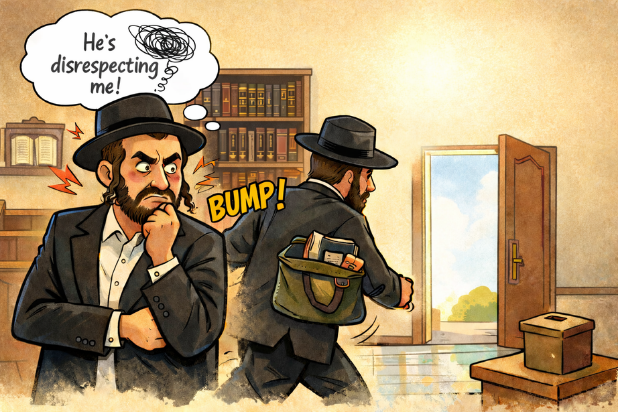
A customer walked into my store yesterday. We started talking, and he shared that even after all these years it still really bothers him when people, even apparent Torah scholars, bump into him or cut him off. He couldn’t understand how people who are supposed to be refined could be so rude.
I told him about a time I went to my Rav, Rav Aaron Dovid Neustadt shlit”a, frustrated that almost every day at the end of davening, during Ein Keloheinu or Aleinu, someone would walk in collecting tzedakah. I was distracted. Annoyed. Trying to be dan l’kaf zechus (judge favorably) and struggling.
My Rav said something simple:
“You’re in the eyeglasses business. Clean your lenses. Your job is to give him tzedakah. You need to see things differently.
Look at him and think, miskin, poor fellow. Miskin that he has to do this. Miskin that he must ask publicly. Miskin that this is how he supports his family.
Put five shekels on the table, ready to give.
Whether he should be collecting at that moment is his issue. Whether I respond with compassion is mine.”
That shift changed me.
My customer’s job is not to understand why someone cuts him off. His job is to shift his perspective.
What’s Really Happening?
Two things get mixed together:
• His behavior
• My reaction
Maybe he was raised differently. Maybe this is normal where he comes from. Maybe he is under pressure.
But the real question is not what he did. The real question is why it is bothering me so much.
The trigger is simple. Someone interrupts. Someone pushes.
The brain immediately assigns meaning. The automatic thought is, “He’s disrespecting me.”
CBT teaches that we do not react to events. We react to the meaning we attach to them. If the meaning is inconvenience, the feeling is mild. If the meaning is disrespect, the feeling becomes anger.
The mind personalizes quickly. It assumes intent. It turns behavior into a statement about my value.
But if I am grounded, his behavior reflects his story, not my worth.
The reframe is simple: “This is about his background or struggle, not my worth.”
Then the focus shifts. What am I supposed to do now?
In this case, it might mean helping someone in need. Or moving out of the way and not taking the push personally.
When I mix up his intent and mine, I suffer. When I separate them, I grow.
Getting Practical: Learning to Let Go
Next time you feel disrespected, ask:
• Is this about right and wrong, or about my need for respect?
• What part of this belongs to him?
• What is my responsibility right now?
You are responsible for your part.
And sometimes the moment that feels like a lack of respect is really an opportunity to strengthen your own self-respect, patience, and avodas Hashem (service of Hashem).